
Berlin is more a part of the world than a city
The history of Berlin began in the 12 century, however, during World War II, many traces of past eras were erased from the face of the earth, such as the Franciscan abbey, the ruins of which are still preserved in the city center in memory of descendants. You can not forget about the Berlin Wall, which divided the city into two states – today its part is also accessible to tourists, and the wreckage is sold as souvenirs.
In general, today’s Berlin is a dynamic and noisy city, the most noisy parties are held in the Friedrichshain-Kreuzberg quarter, shopping is worth going to the Charlottenburg-Wilmersdorf area or the Lafayette gallery, and children will be pleased to go to the city zoo. And, of course, you can’t help but go to one of the local restaurants to taste hearty German dishes and drink a mug of foam.
But behind the sights it is worth heading to the central city quarter of Mitte, where the famous Brandenburg Gate is located. It is necessary to climb the observation deck of the infamous Reichstag, or visit the Museum Island, where magnificent collections of works of art are collected. Among the monuments, miraculously surviving castles can be noted: Charlottenburg, Potsdam and Ephraim.

Measured and solid Cologne
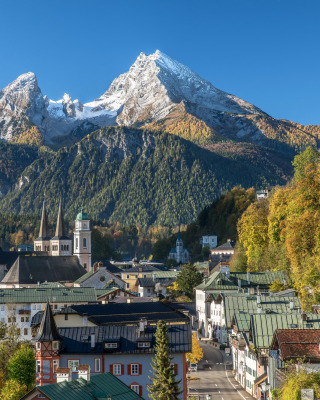
The measured and solid Cologne, standing on the banks of the Rhine, like many other German cities, was almost completely destroyed during the war years. Despite this, the locals managed to preserve one of the greatest German monuments – the majestic Cologne Cathedral, towering immensely in the city center, striking with an abundance of spires and decorative Gothic elements. It is located in the central district of Cologne – Altstadt. There is also an overwhelming number of traditional German beer, restaurants, which serve fragrant meat dishes, as well as souvenir shops.
A beautiful pastime will be a walk along the embankment, a particularly impressive view opens to the cathedral, from the opposite side of the river. To see the picture in all the splendor, you should go to the promenade in the evening when the backlight lights up.
There are many museums in Cologne: a beautiful collection of works of modern art is presented at the Ludwig Museum, but lovers of antiquity should go to the Romano-Germanic Museum. Visit St. Martin’s Church. With children, you should definitely visit the Fantasiland amusement park, where many fantastic multimedia shows are held, as well as attractions.

City of the great Goethe
Frankfurt am Main is giving travelers plenty of opportunities to have a great time. No matter what period it turned out to come to this modern German city – for a week or a month, the vacation here will be unforgettable. Acquaintance with Frankfurt should begin with an inspection of its historical center Remer. Here everyone will be able to see how the city looked a few centuries ago, because most of it was destroyed during the Second World War. See the modern side of Frankfurt am Main as best as possible will allow the trading street Zail, come here for the sake of many hours of shopping.
Relax and have a nice time, going on a river walk under the bridges, listening to music and a guide. An alternative to a boat tour will be a walk along the Main. Along the way you can go to museums located on its left bank. Interest will be aroused by the Zenkenberg Museum of Natural History, the Caricature Museum, the Archaeological Museum, and the Museum of Icons. Those who travel with a child should look at the Children’s Museum. Little tourists will like it in the city zoo. Climbing the terrace of Galeria Kaufhof Shopping Center, you can enjoy a beautiful view of the city. From here you can see the famous skyscrapers of a large financial center in Europe. They come to Frankfurt am Main not only for the sake of excursion, there will be a pleasant time for those who appreciate gastronomic pleasures. Several Michelin star restaurants are open in the city. In addition, here, unlike other regions of Germany, they actively drink not beer, but apple wine. Numerous wine bars hospitally welcome tourists.
It is also worth coming to Frankfurt for the sake of the Christmas fair. Every year Weinachtsmarkt opens in November and continues inclusive until Christmas. Events and trade take place on Remer Square and central streets – it is impossible to miss.

Foam Happiness Named Beer
The same thing that most travelers go to Germany for. And they do the right thing, because brewing traditions in this country are considered the oldest in the whole world and date back to 736! Of course, there are a lot of German beers. But if we say “in general,” then three groups can be distinguished: dark (dunkel) and light (hell) varieties, and also the so-called “weissbier” (weisbir), that is, white wheat beer. The latter must be tried necessarily, because it is difficult to find such a thing with us, and if it is possible, it will either be “wrong,” or prohibitively expensive. In Germany, this divine drink is inexpensive and affordable! Let’s say more – weissbier needs to be tasted even by those who, in principle, do not drink beer. Of the traditional light and dark varieties, it is difficult to name something specific, since it is not that each region, but even each city or village, is famous for their own beer and considers it the best.

Sausages and sausages
The most traditional snack for a foam drink in Germany are considered… carries, not granks, but sausages and sausages! And they, like beer, are different in each city. The most delicious and delicious, in our opinion, are the Bavarian Weisswurst (Weiswurst). Traditionally they are eaten with sweet mustard. By the way, you will not find this, so in Germany we advise you to try mustard even those who usually do not like it. There are also a lot of other representatives of the sausage family: Nuremberg Bratwurst, ham Schinkenwurst, Frankfurt sausages Frankfurter (served as a hot dog in a bun) and traditional Currywurst… All delicious, but it is impossible to list them all! But you can talk about the cousin of German sausages – a dish called Leberkase. In fact, this is a huge sausage in the form of our Russian “brick” of rye bread. Served in Leberkese in the form of a pair of three chopped fried slices with an appetizing crust, and all this needs to be eaten, of course, with mustard)
And the side dish relies on sausages!
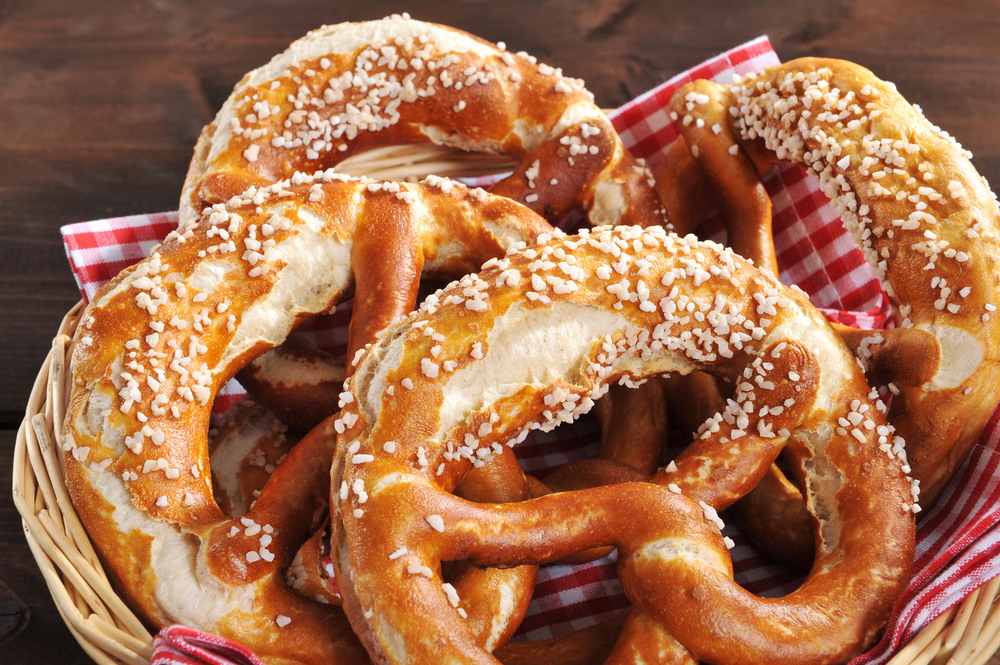
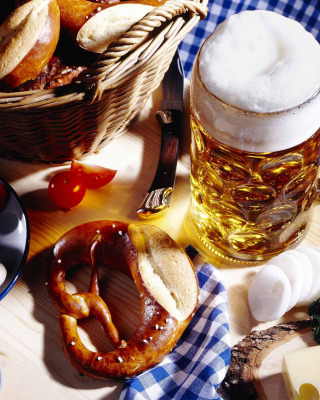
Usually for all sausage-sausage dishes you will be invited to choose a side dish. The most popular are sour Kartoffelsalat and sauerkraut sauerkraut. However, the latter is completely unlike what we have a similar name. In Germany, this is a very delicate acidic stewed cabbage, which is served hot to sausages. In addition to the side dish, many may need bread. If at this point you are in the Bavaria region, then be sure to take a stunning pretzel called Brezen (aka Brezel or Prezel). And if you ask him to cut it along and grease it with butter mixed with green onions from the inside, then you can not take another snack for beer at all)

Variations on soup theme
The Germans also succeeded in preparing soups. In the country of true potato fans, of course, Kartoffelsuppe holds first place. It is already followed by all the others: the original soup with pancakes called Pfannkuchensuppe, Eintopf meat soup stew, beer soup (where without this?) Biersuppe, Tomatensuppe tomato soup and despite its Hungarian origin, the world-famous Gulaschsuppe is very delicious.

And dessert!
The most popular cake in Germany is the chocolate Black Forest (Schwarzwald torte). A little less known, but from this no less tasty, German Lebkuchen gingerbread, the most tasty of which are rightfully considered Nuremberg. Closer to Austria, in the Bavaria region, Apfelstrudel will increasingly come across in the sweet section of the menu and I must say that it is prepared here no worse than at home! It will not cost the dessert business without Kartoffeltorten.
As for beer in Germany, the content (namely, the variety of drink) usually determines the shape of the vessel from which it should be consumed. As a souvenir, you can buy, for example, a Bavarian liter mug (Maßkrug) – glass or porcelain, with a zinc lid or without a lid, simple or painted.
Decorative nutcrackers (Nussknacker) from the Ore Mountains region are traditional satellites of German Christmas. They began to master them in the first half of the 19th century, and they gained world fame after the publication of Hoffmann’s fairy tale and the production of Tchaikovsky’s ballet. You can choose from kings, foresters, hussars, trumpeters… You will not list all the options.
“Real Cologne Water” (Echt Kölnisch Wasser No. 4711) is the most famous, although not the oldest Cologne cologne. It’s sold everywhere in Germany. Another, less famous now, but the very first Eau de Cologne by Farina, used by Frederick the Great, Napoleon and Nicholas I, Cologne guests can buy in the Perfume Museum near the town hall.
It is difficult to return home from Berlin without at least one bear – Berliner Bär. This beast adorns the coat of arms of the city from the end of the XIII century. However, as historians suggest, the name Berlin came during the colonization of the eastern lands by Germanic tribes not from the German word Bär, but from the ancient Slavic berl – a swamp.
Serious competition to bears in the capital’s souvenir market is made by East German traffic lights – DDR-Ampelmännchen or Ost-Männchen. Their distinctive feature is wide-brimmed hats, and they received cult status during the GDR. In Berlin, you can buy, for example, a lamp with such a man, as well as bags, figures, corkscrews, watches, key boxes, and so on.
Such drinks as tea or coffee are also asked to be served in Meissen porcelain cups. However, not only cups are made in this city on the Elbe. We must not forget about other manufacturers – for example, the company Fürstenberg from the city of the same name on Weser, as well as Nymphenburg from Munich and Rosenthal from Franconia.




960
bridges
2014
year
400
zoos
3.49
trillion euros
6
million
More bridges than Venice
Berlin has more bridges than Venice. The capital of Germany has 960 bridges and 59.8 km2 of water (lakes and 180 km of navigable waterways). Berlin, together with its surrounding land, Brandenburg, is the largest inland water network in Europe.
Education
Education in German colleges is free even for foreigners. Tuition fees at public universities for a bachelor’s degree were abolished in 2014. Politicians considered the need to pay for higher education a social injustice.
Berlin Zoo
Berlin Zoo is the largest in the world. Germany has more than 400 zoos. And if you count zoos, wildlife parks, aquariums, bird parks, reserves and safari, then there are more than 700 such objects in Germany.
Economy
Germany is the largest EU economy. The country’s GDP is 3.49 trillion euros. This is the fourth economy in the world after the United States, China and Japan.
Cars
Germany is one of the world’s largest car manufacturers. In 2015, 6 million German cars were sold. Golf VW is one of the best-selling cars of all time.