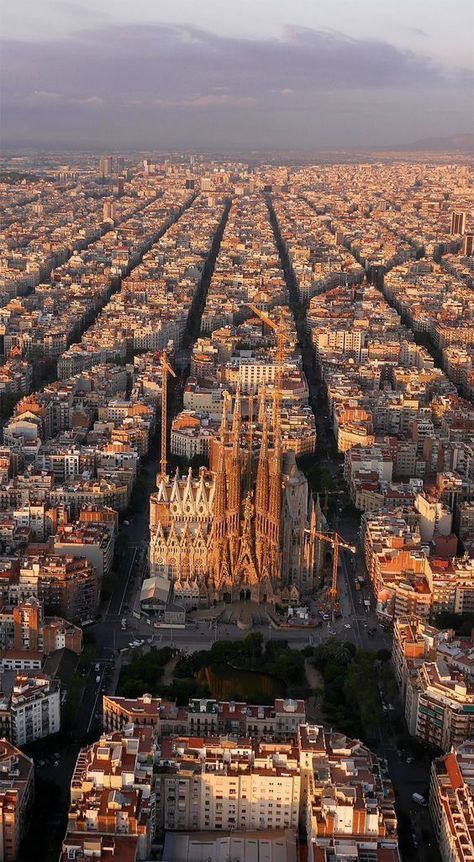
Beautiful as a Madonna
Holidays in Spain are quiet streets and noisy beaches, rocky shores and sandy bays, corrida and flamenco. If you want a “lazy” beach holiday – pay attention to the island coasts. If you are full of energy and energy to learn and see a lot of new things – you should definitely consider the continental part of Spain.
Before the vacation, you should think carefully about your route. In Spain, you should not sit in one place – you need to go around as many cities as possible to see as many sights as possible. It is worth noting immediately that there is no special point in going to the Canary Islands for sights – these resorts are designed for an excellent beach, but not a sightseeing holiday. The list for visiting should include not only the capital of Madrid (which is known for its architecture), but also cities such as Santiago de Compostela. This ancient city has a rich history, mainly associated with the Christian religion. Of course, this historical wealth could not but affect the excursion programs – there are quite a lot of them here. If you are interested in all forms of youth leisure, be sure to stay in hotels located as close as possible to 24-hour clubs and bars. With nightfall, Spain is full of discos, noisy parties and incendiary shows. Especially lovers of entertainment should like Mallorca and Ibiza, where music sounds 24 hours a day.
Spain can offer tourists an already entrenched “monastery” route, which has been popular with many architectural enthusiasts for many years. This route includes Huesca, Barcelona, Zaragoza and many other cities. By taking a tour along such a route, you give yourself the opportunity to admire the majestic and picturesque monasteries, cathedrals and churches located in Spain. Often, several buildings in France are included in this route – the proximity of these countries allows you to visit both during a tour of Spain.
The incredible atmosphere of the holiday, the ugly aroma of wine, unique culinary exits, medieval architectural monuments, diverse nightlife, fashionable sales, cordial locals – who at least once visited there, returns to these paradise areas again and again to get an unforgettable holiday in Spain.

Paella
Paella is a traditional rice dish that appeared in Valencia. Three types of paella are known in Spain: Valencian paella (white rice, vegetables, chicken, duck and rabbit meat, snails, beans and spices), paella with seafood (rice, seafood and condiments) and paella mixta, which is a free combination of products, usually rice, chicken, seafood,
Hamon
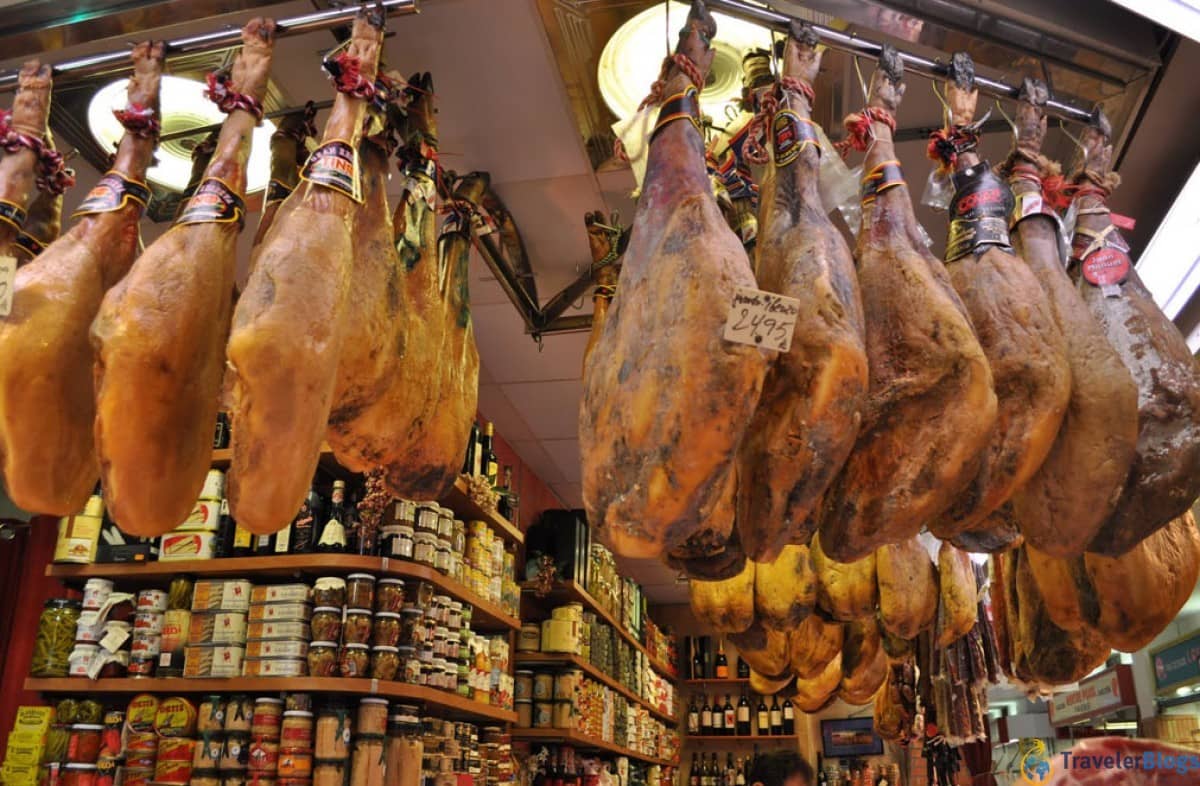
Another treat, delicacy and treasure of Spain. Hamon (jamon) – raw ham, literally means “ham.” To prepare hamon, you need only 4 components – fresh pork, salt, air and time. True hamon, like good expensive wine, has been born for more than one year. There are 2 main types of hamon: hamon serrano (a white breed of pigs) and hamon iberico (a breed of black Iberian pig). The leg of the hamon is serrano – with a white hoof, the leg of the iberico – with black. The process of preparing serrano hamon lasts at least 9 months, and iberico hamon lasts much longer. It is served as a separate dish, and also added to soups. Hamon is the main ingredient for sandwiches and wine snacks.
Tapas
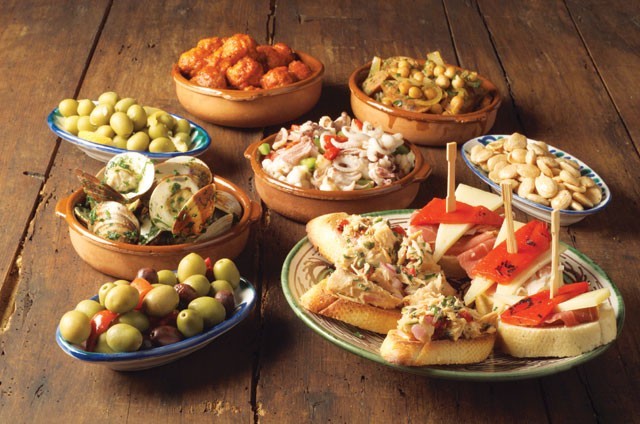
Tapas is part of Spanish culture, and to better understand this, you must know that in Spanish there is even such a verb “tapear” that means “there is tapas.” Because of the hype around tapas, sometimes you have to pay for these snacks. While in cities such as Madrid and even Barcelona tourists are provided free of charge when ordering a drink in a bar or pub, there are still places such as Basque Country or Andalusia, where you are most likely not to get free tapas.
Tortilla
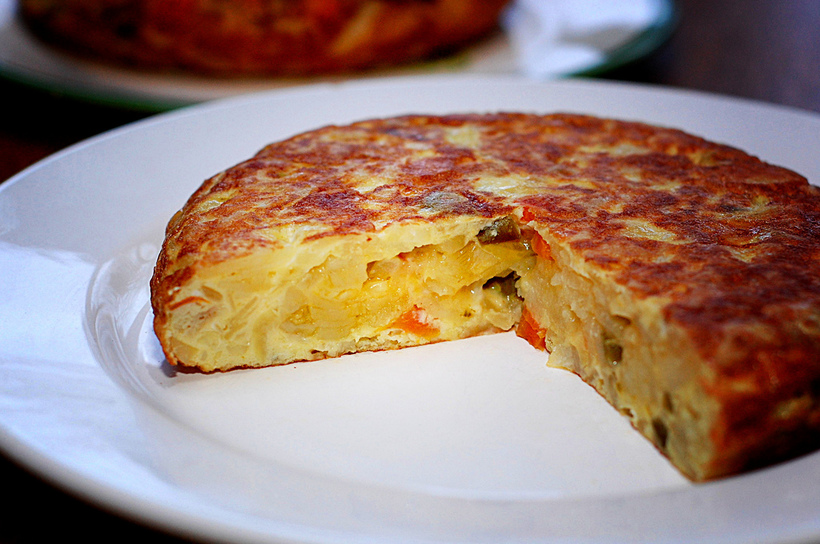
This Spanish omelette is the most common dish in the country and it always consists of potatoes, eggs, onions, salt and pepper.
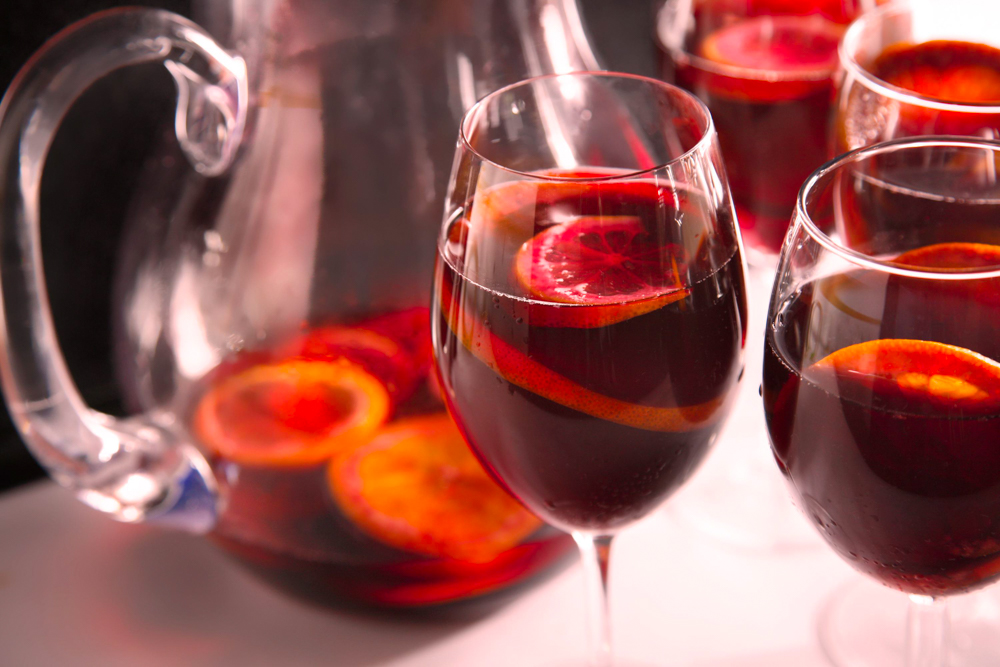
Sangria
This low-alcohol refreshment along with hamon and paella is a real hallmark of Pyrenean gastronomy. It consists of three main ingredients: wine, water and fresh fruits. Each Spanish hostess keeps in strict secret a family recipe for the production of fruit wine sangria. At the same time, the fantasy in the manufacture of this cocktail is only welcome. Therefore, the sangria wine drink has no canonical taste.
Spanish wine – you can talk about it endlessly! It is surprisingly tasty and light, saturated with notes of a variety of tastes. You can buy a bottle for 3 euros or for 300. They will, of course, be different, but the stunning taste is guaranteed regardless of price.
Chorizo or choriso is a piquant pork sausage. The main ingredient in the preparation, in addition to meat, of course, paprika. It gives the sausage a characteristic scarlet color and a thick aroma. Ways to use chorizo mass – it can be eaten as tapas (that is, snack), made sandwiches with it, added to broths. Thanks to its rich taste, it is good in almost any form.
Traditional Spanish fine sausage. On top, it is covered with edible white mold. On the slice, it has a dark brown, saturated color. Make sausage from pork. Often cheese, figs, green peppers or olives are added to it. There is also a fuet from wild boar meat.
Veer is one of the attributes of flamenco, which makes it the most, no matter what, Spanish souvenir. I must say that references to this accessory date back to the VIII-II centuries BC! Further, in different eras, fans were modified, lost and regained popularity, becoming even a luxury item. Today, the fan is available to everyone, so in dozens of tourist cities in Spain it can be purchased literally for 1 euro, as a pleasant reminder of this bright and amazing country.
Caganer is a funny Catalan souvenir dedicated to the New Year and Christmas holidays. A verbatim translation of “what a person,” and, indeed, is a figure of any fictional or existing character depicted at the time of solving his need. The roots of such a strange tradition go far into the past, for peasants such a figure was associated with fertility, since it was associated with fertilization of the earth. Today, what kind of people are made in the form of famous cultural and political figures, football players and pop stars, which indicates that all people are equal.
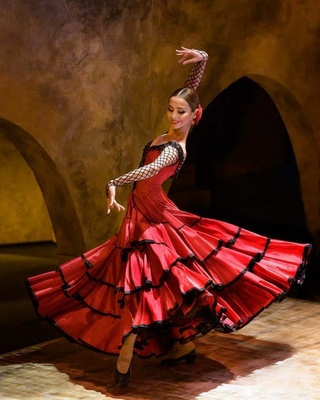
This is a small and fairly simple musical instrument, which is two concave wooden plates made in a shape resembling a shell and connected to each other by a cord. Castagnets are widely used in flamenco dance. Moreover, there are several sizes of castanets, and it is the sound of this musical instrument that depends on the size. Being able to play castagnets is a real art, but tourists often purchase the cheapest castagnets sold in souvenir stores, without worrying about their sound qualities. The main thing is that at home these small wooden shells depicting hispanics in bright dresses will remind of a trip to the homeland of passionate flamenco.




440
million
50
%
718
year
44
1725
year
Spanish language
Spanish is the second most common language in the world after Chinese. About 440 million people speak it.
Olive oil
Spain produces half of the world’s olive oil, the lion’s share of which comes from Andalusia. Spain also accounts for about 20% of the world’s olive oil consumption.
Culture
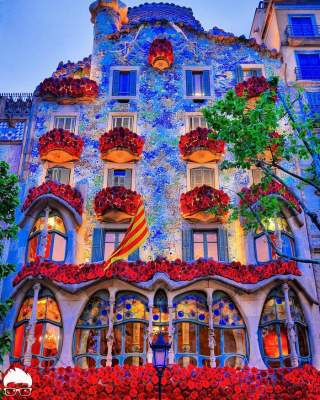
Spain was conquered by the Mauritanians in 711-718. Thanks to the Muslim heritage, Spanish culture is more diverse and unique than, for example, in neighboring France.
UNESCO World Heritage Sites
Spain has 44 UNESCO World Heritage Sites: prehistoric rock painting, historical cities and buildings, bridges, national parks and landscapes. More only in Italy (49) and China (45).
The world’s oldest restaurant.
Madrid is home to the world’s oldest restaurant. Despite the fact that other restaurants dispute this fact, it is Restaurante Botín, which was opened in 1725, that is listed in the Guinness Book of Records. Branded dish? Cochinillos asado (fried milk piglet).